Iron and Steel
Sustainable, scalable by-product management solutions for metal recovery, improved sinter and lower carbon costs
Steele stiff extrusion powers sustainable, scalable by-product management solutions for iron & steel mills around the world. These solutions deliver more metal recovery, improved sinter and lower carbon costs.
Our process converts fine, wet materials into engineered, high-quality feedstock— for the consistent durability and reducibility you need in your melt recipe. Your sinter performance and productivity improve, while you recover the captive value in your by-products and shorten your supply chain.
This is the essence of the circular economy, eliminating waste and extracting maximum value as cost-efficiently as possible.
Steele stiff extrusion optimizes iron & steel by-product management.
Unlock the value in your mill by-products
Stiff extrusion eliminates your mountains of accumulated by-products, unlocking the high-Fe material and carbon units in the form of cold-bonded briquettes or pellets for feedstock, which you can produce on- or off-site. A complementary stiff extrusion line to sinter strands can also improve their performance, removing the fine materials that cause problems with sintering.
Our extruders require minimal moisture and binders, to recover more high-value ferrous waste and carbon units.
A process optimized for minus 3mm fines
Our extruders reclaim the value in these fine, wet and sticky mill by-products:
Blast furnace sludge, dust and fines
Mill scale
Iron ore pellet fines and concentrates
Baghouse dust
Metallized fines (DRI)
Ladle slag
Why stiff extrusion recovers more by-product value
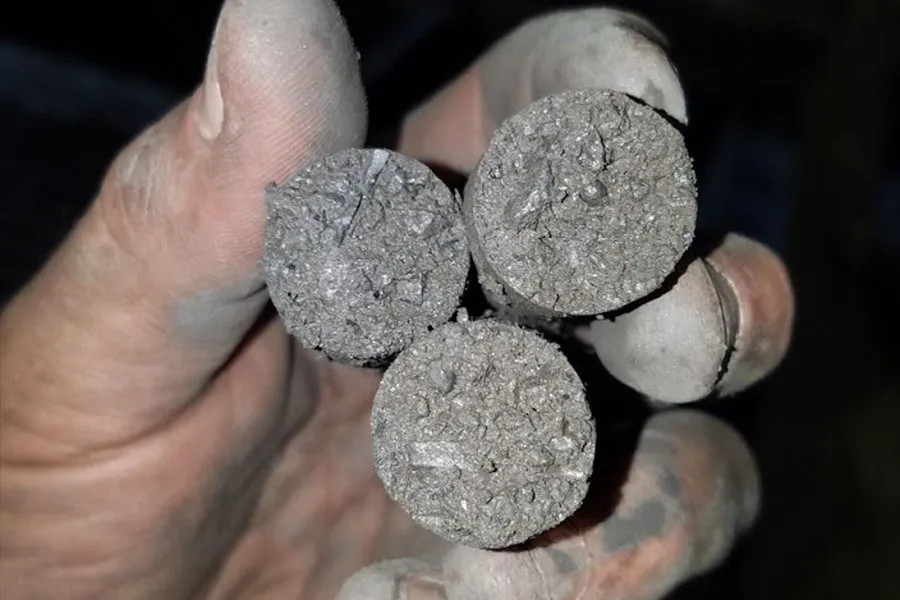
Our process uses high-shear mixing and vacuum de-airing to shape your bulk raw materials into durable units (Steele extruded pellets and briquettes are strong enough for rough handling in their green state).
Vacuum improves both the green and cured product strength and binder effect. The lower levels of binder and moisture required permit more metal recovery from slag and other steel production residues — with individual waste streams converted into homogenous feedstock for your melt recipe.
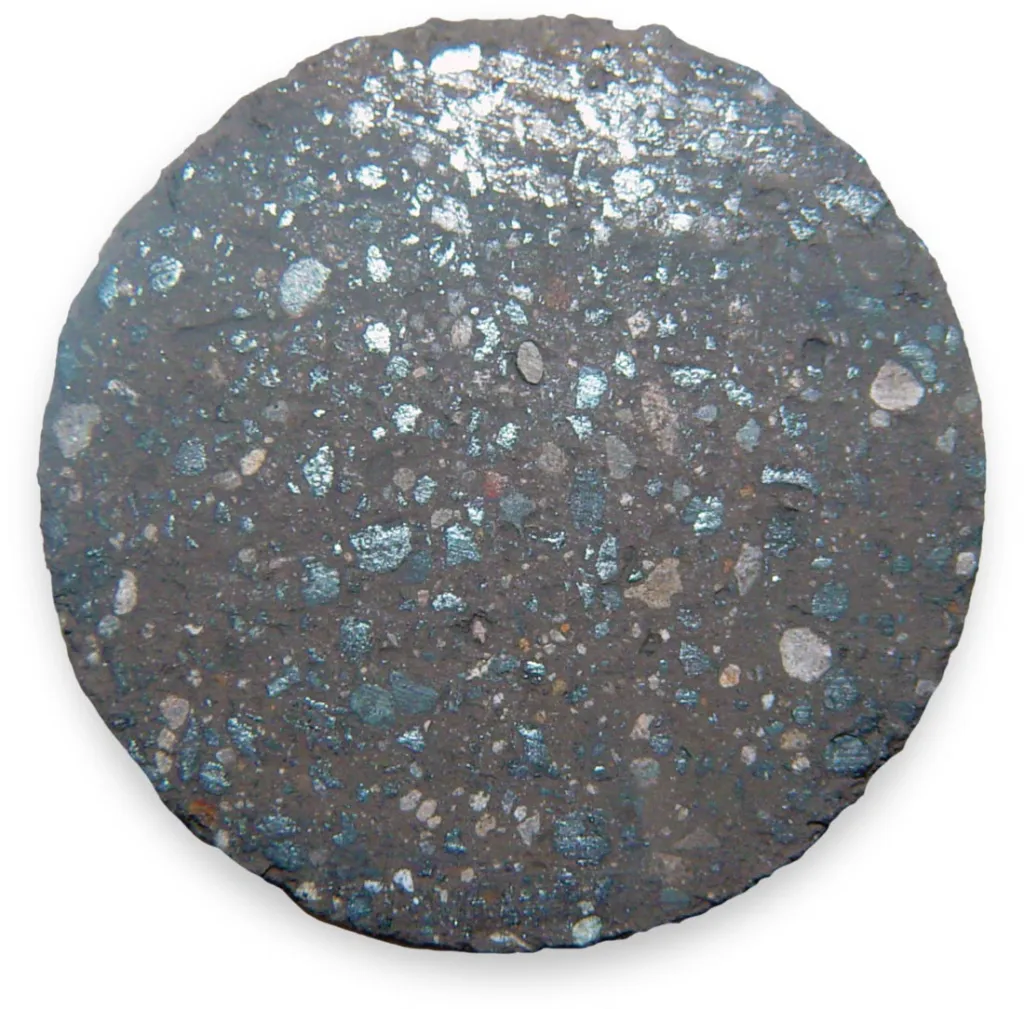
Better durability and reducibility for your circular economy
Stiff extrusion uses cold bonding, which eliminates the need for gas, hearing or firing to recover lost iron and carbon units, for a critical drop in your CO2 emissions.
- Conversion — Iron- and carbon-rich fines, dust and wet sludge converted to high-quality feedstock
- Mixing— Connects fine carbon particles to iron oxides for improved reduction
- Binder — Less binder for more high-value metallics and carbon recovery
- Sizing — Our dies ensure precise sizing, from 10-150mm, for most smelting processes
- Sustainable — Cold-bonded briquetting complements sintering process to cut CO2 emissions
- Durable — Units are weather-resistant and pass industry tumble test specifications
Steele extruded briquettes and pellets are shippable, handling 20+ transfers and arriving with attrition rates below specification. They also handle 60-90 days of exposure before melting.
The end result is a sustainable agglomeration solution with lower CO2 emissions than the industry sinter standard.
C A S E S T U D Y
Mill blast furnaces run 100% briquettes
Problem:
Our customer in West Bengal, India faced rising costs for iron ore and coke, the primary burden material for his blast furnaces.
Solution:
The mill had ready access to fines from its DRI process, plus wet, carbon-rich LD sludge and blast furnace dust imported from Australia. Steel provided key process equipment and start-up support, to produce roughly 60,000 tons of engineered feedstock annually.
Today, the mill runs 100% stiff extruded briquettes
In addition to producing feedstock for its own blast furnaces, the mill also supplies a leading Indian steelmaker with extruded briquettes, which is charging between 3-5% in a high-volume furnace.
Result:
The homogenous blend of iron oxide fines and fine carbon particles have driven a 20%-plus reduction in coke rates. The briquettes’ carbon content has reduced the need for imported carbon from Australia for both the mill and its customer’s mill, while improving the performance of sinter strands (stiff extrusion removes the fine materials that cause problems with sintering).
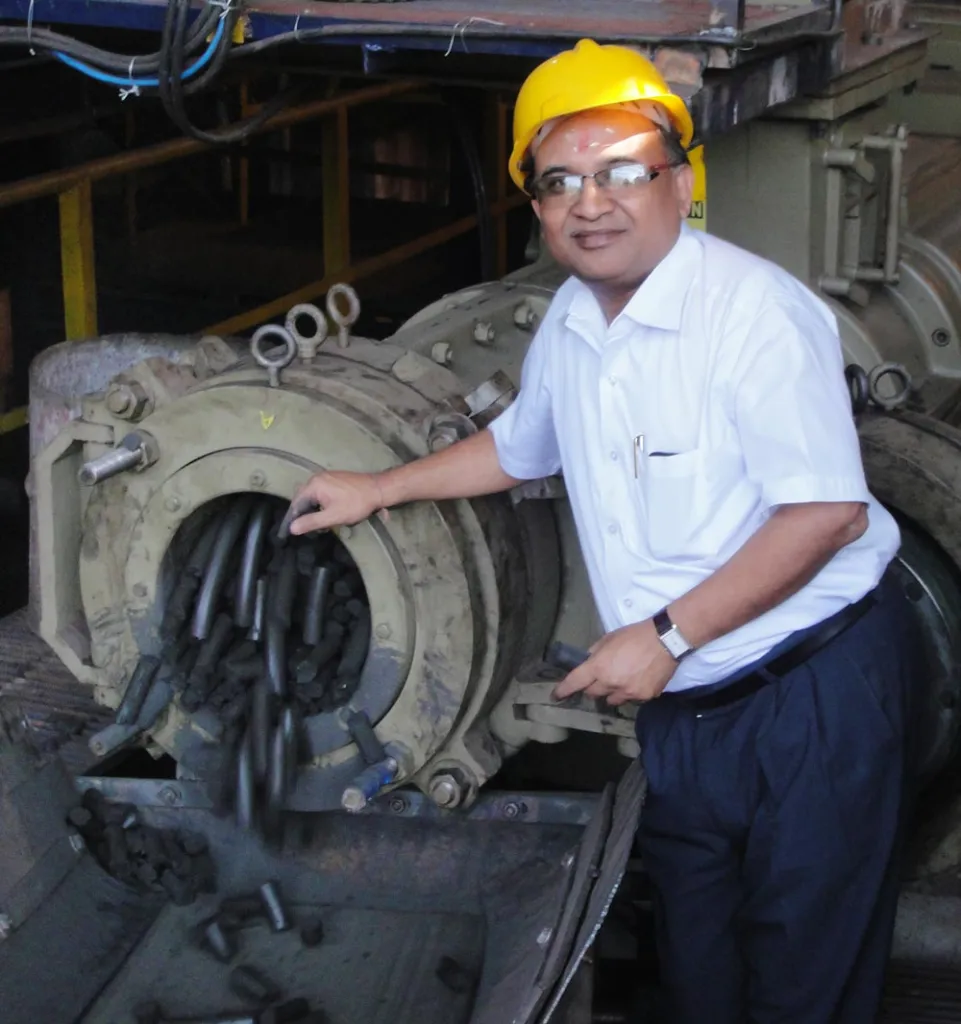
This pig iron producer has made his blast furnace feedstock since 2012.
Scalable solutions for greater cost-efficiency
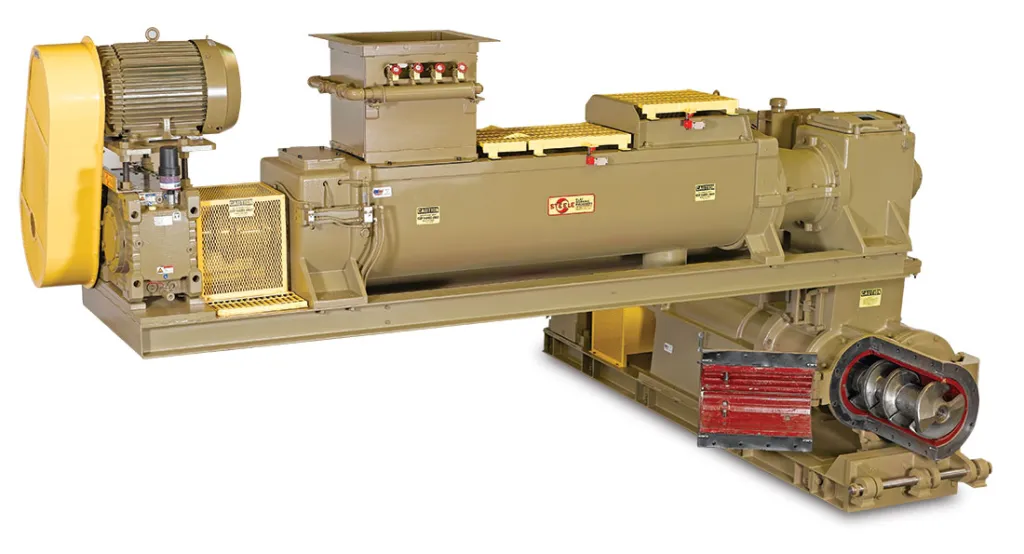
Steele extruders deliver the reliability you need for a simple process. They’re heavier and more durable than competitive machines built with fabricated frame components and augers — we cast primary frame components from ductile iron and wearing parts from our wear-resistant high chrome alloy.
Steel offers multiple solutions for pilot plants and full-scale production requirements:
| Extruder | US tons per hour* | Metric tons per hour* |
| HD Series | 5 | 3 |
| 25 Series | 22 | 20 |
| 45 Series | 51 | 47 |
| 90 Series | 90 | 81 |
*Tonnages based on material density.
Your machines will deliver decades of production, backed by Steele’s global service and inventory commitment.
Machinery plus engineering, parts and service
Steele machines come with turnkey product, plant and application engineering, to ensure a reliable stream of high-quality, consistent feedstock.
Our by-product management solutions start with complete in-house lab and test plant services. This is critical, because there is no standard raw material.
We’ve been repurposing and adding value to bulk raw materials since 1889, so we have the material preparation experience and skills to engineer an optimal agglomerated product. We can evaluate stiff extrusion for your feedstock requirements, working with up to 5 kg of your raw materials in our lab and up to 20TPH in our test plant.
Once we’ve qualified your materials, we’ll recommend specific machines and a process for a homogenous mix and consistent performance in the furnace. You can read more about our engineering and lab services here.
Steele joins with TMS International to offer customized full-scale trials
We started working with TMS International, a global leader in on-site mill services, in 2014. TMS International opened its Extruded Product Services (EPS) pilot plant in Middletown, Ohio in 2016, to stage feedstock trials for mills looking for sustainable, scalable by-product management and metal recovery.
Steele stiff extrusion powers the EPS process, converting fines, dust and sludge into standardized, consistent feedstock for customer melt recipes. To learn more, visit TMS International or contact Steele.
TMS International opened a dedicated EPS plant on-site for CAP Acero Steel in Concepción, Chile in 2019.
Proven Metal Recovery With Simple, Reliable Equipment
If your mills are accumulating mountains of minus 3mm fines with varying moisture levels, then you’re in our sweet spot and we should talk.
For more information on Steele by-product management for iron and steel mills, talk to your regional Steele sales representative or call +1.704.872.3681.